Two Paths to Growth Capital
Every startup that needs capital beyond bootstrapping faces a fundamental choice: give up equity or borrow against future revenue. Equity financing — angel rounds, VC investment, growth equity — provides capital in exchange for ownership. Revenue-based financing (RBF) provides capital in exchange for a percentage of future revenue until a predetermined cap is repaid.
The conventional wisdom treats this as a dilution-versus-debt decision. But viewed through the lens of intangible assets, the decision reveals deeper strategic dimensions. The capital structure you choose affects which intangible assets you build, how quickly they compound, and who benefits from that compounding.
15-25%
typical equity dilution per round
1.3-2.0x
typical RBF repayment cap
5-10%
revenue share rate for RBF
★ Key Takeaway
The choice between RBF and equity is not just about dilution versus cost of capital. It is about which intangible assets you are building and whether those assets benefit more from capital preservation (RBF) or capital scale (equity).
How Each Model Affects Intangible Asset Growth
Equity financing: scale-dependent assets
Equity financing provides large sums without repayment obligations, making it suited for building intangible assets that require significant upfront investment and have long payback periods.
Technology platforms that need 2-3 years of engineering before revenue, network-effect businesses that must reach critical mass before value compounds, and research-intensive products with extended development timelines all benefit from equity capital. The investor accepts the risk of the long development period in exchange for ownership of the resulting assets.
Revenue-based financing: efficiency-dependent assets
RBF provides smaller amounts of capital with near-term repayment, making it suited for building intangible assets with shorter time-to-value.
Customer acquisition campaigns where the spend-to-revenue cycle is measured in months, product enhancements that improve retention or expansion within existing customer base, and market expansion into adjacent segments using a proven product all benefit from RBF. The capital is repaid as the intangible asset (customer capital, brand equity) generates revenue.
Decision Matrix
| Factor |
Favours Equity |
Favours RBF |
| Asset build time |
Long (12+ months to revenue) |
Short (3-6 months to revenue) |
| Capital requirement |
Large (>£1M) |
Moderate (£100K-500K) |
| Revenue predictability |
Low or pre-revenue |
High, recurring |
| Asset type |
Technology, IP, R&D |
Customer acquisition, brand, market expansion |
| Founder ownership priority |
Lower priority than speed |
High priority |
The Intangible Asset Valuation Impact
The financing choice affects not just dilution but the valuation methodology that applies to your company.
Equity-funded companies
Equity rounds establish a market valuation — the price investors paid implies a total company value. This valuation reflects the full intangible asset portfolio, including assets still under development. The income approach or market comparables typically drive these valuations, with significant premiums for growth trajectory.
RBF-funded companies
Companies that grow using RBF do not have equity round valuations to reference. Their intangible assets must be valued using the cost approach or demonstrated cash flow performance. This is not a disadvantage — it means the founder owns a larger share of assets that may be valued more conservatively but are entirely theirs.
✔ Example
Two SaaS companies reach £2M ARR. Company A raised £3M in equity, diluting the founders to 60% ownership. Company B used £400K in RBF (fully repaid) and bootstrapped the rest. At a 10x revenue multiple, Company A is worth £20M — but the founders' 60% share is £12M. Company B is also worth £20M — and the founders' 95% share is £19M. The RBF approach preserved £7M more in founder value.
When to Combine Both
The most sophisticated funding strategies use both equity and RBF at different stages and for different purposes.
ℹ Note
Hybrid approaches are increasingly common. Raise equity for the long-term, scale-dependent intangible assets (technology platform, core IP, team) and use RBF for the shorter-cycle, efficiency-dependent assets (customer acquisition, market expansion). This minimises dilution while ensuring adequate capital for each asset category.
1. Map your intangible asset build plan
Identify which assets need capital and their time-to-value. Use Opagio's free Intangibles Questionnaire to assess your current portfolio.
2. Categorise by build time and capital need
Long-build, high-capital assets are equity candidates. Short-build, moderate-capital assets are RBF candidates.
3. Model the dilution impact
Calculate founder ownership under equity-only, RBF-only, and hybrid scenarios through to exit.
4. Execute the hybrid strategy
Use equity for platform and IP investment. Use RBF for growth capital with proven unit economics.
IP-Backed Lending: The Emerging Alternative
Beyond traditional RBF, a growing number of lenders now offer capital secured against intangible assets — patents, software IP, and customer contracts serve as collateral rather than personal guarantees or physical assets.
This model is particularly relevant for startups with strong IP portfolios but limited revenue. The lender values the IP using Relief from Royalty or cost approach methods, and provides capital based on a percentage of that value. The startup retains full equity while accessing capital that reflects the genuine value of its intangible assets.
Common Mistakes in Funding Strategy
- Defaulting to equity — many founders raise equity because it is the most visible option, not because it is the right one for their intangible asset profile
- Ignoring the total cost of equity — a 20% equity round that leads to a £100M exit costs £20M. A £200K RBF facility with a 1.5x cap costs £300K. The comparison is not close
- Using RBF for long-build assets — RBF repayment obligations constrain cash flow. If the capital is funding 18-month technology development, the repayment schedule will conflict with the investment timeline
- Not valuing intangible assets before negotiating — whether raising equity or structuring RBF, founders who can quantify their intangible asset base negotiate from a position of evidence
★ Key Takeaway
The optimal funding strategy maps to the intangible asset build plan. Use equity for assets that need scale and time. Use RBF for assets with proven, short-cycle returns. And always quantify the intangible assets you are building — it is the foundation for every capital decision.
Model Your Intangible Asset Strategy
The Opagio Calculator supports financial modelling for intangible assets, including valuation scenarios under different capital structures. Opagio Intangibles provides asset-by-asset valuations using cost approach, RFR, and MPEEM methods.
About the Author
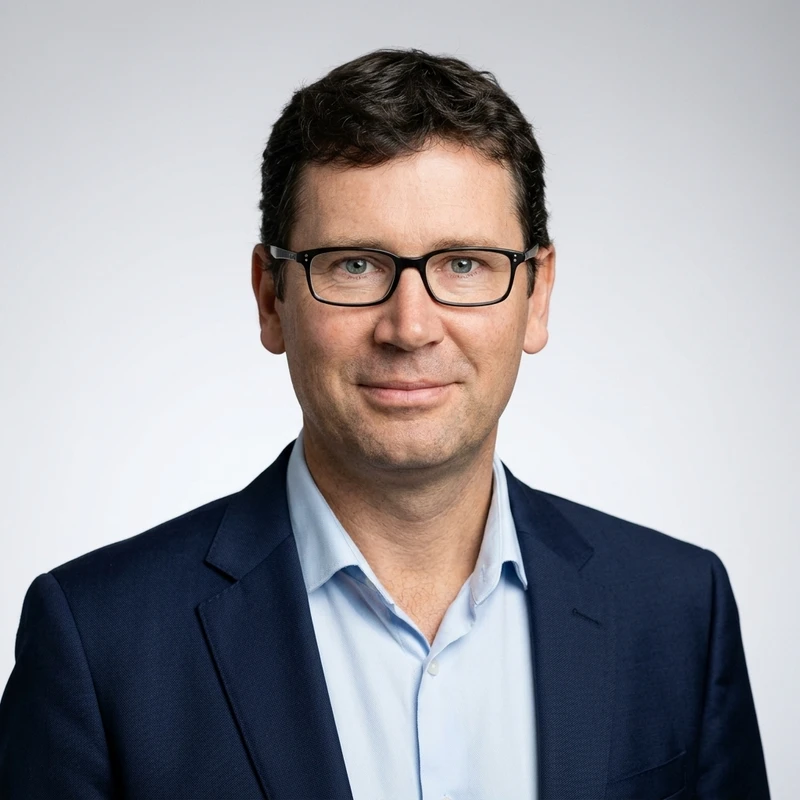
Ivan Gowan is the Founder and CEO of Opagio. With 25 years in financial technology — including experience across equity, debt, and hybrid capital structures at IG Group — he brings practical perspective on how funding decisions interact with intangible asset value creation. Meet the team.